
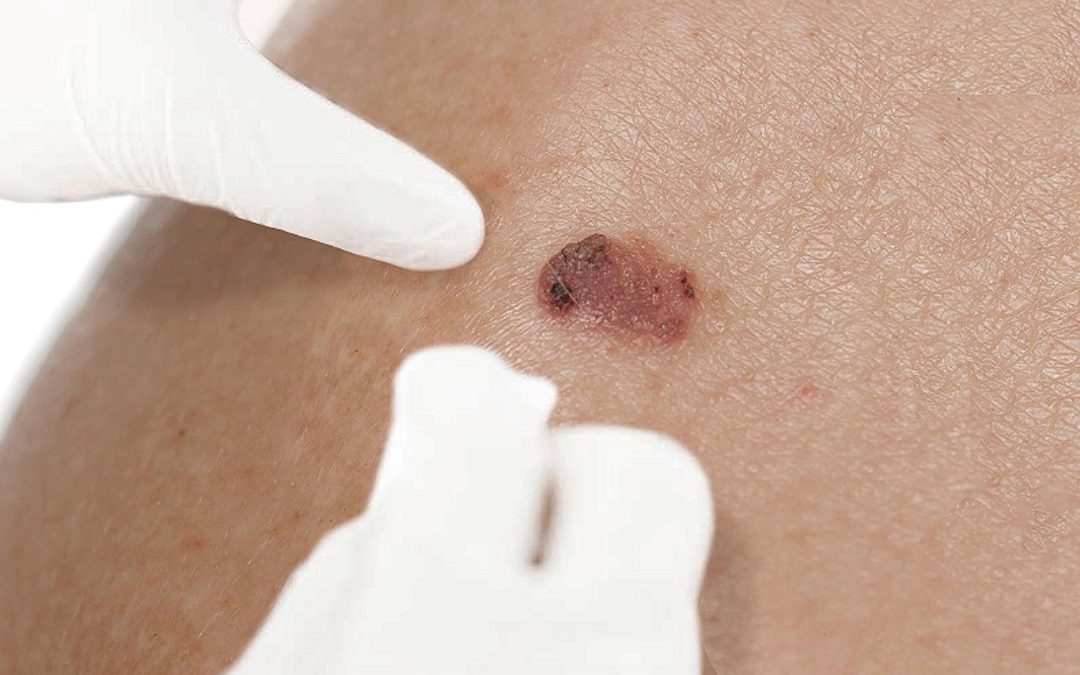
Understanding complex skin cancers
What makes a skin cancer “Complex”?
- High-risk location
Certain areas of the body are considered high risk because they contain:
- Critical structures (important vessels, nerves, cartilage)
- Limited extra skin for closure
- High cosmetic and functional importance
Common high-risk areas include:
- Eyelids and around the eyes
- Nose
- Lips
- Ears
- Fingers, toes, and nails
- Genitals
In these areas, even a small tumor can cause vision problems, breathing issues, speech difficulties, or nerve damage if not carefully managed.
- Large size
Skin cancers become more complex when they are:
- >2 cm on the body
- >1 cm on the face
- Spreading across natural boundaries (e.g., nose to cheek)
Large tumors often:
- Require wider margins
- Involve deeper layers (fat, muscle, cartilage, bone)
- Leave larger defects after removal
- Aggressive or high-risk tumor type
Examples include:
- High-risk squamous cell carcinoma
- Infiltrative or morpheaform basal cell carcinoma
- Melanoma
These cancers:
- Can spread microscopically beyond what’s visible
- Have higher recurrence rates
- May involve nerves (perineural invasion)
- Recurrent skin cancer
A tumor that has:
- Been treated before and returned
- Scar tissue from prior surgery or radiation
Scarred tissue hides tumor borders, making removal harder and increasing recurrence risk.
- Patient-specific factors
Complexity increases if the patient has:
- Poor wound healing
- Prior radiation in the area
- Immune suppression
- Limited ability to tolerate long surgery
How does surgical planning differ for complex skin cancers?
- More precise margin control
Instead of “cut and close,” surgeons may use:
- Mohs micrographic surgery (layer-by-layer removal with real-time microscopic analysis). It removes all cancer while sparing as much healthy tissue as possible
- Imaging or biopsy mapping for deeper tumors
- Multistage surgery
Complex cases may involve:
- Cancer removal on one day
- Reconstruction on the same or a later day
- Coordination with specialists (oculoplastic, ENT, plastic surgery)
- Advanced reconstruction planning
Closure is often the hardest aspect or defect reconstruction.
Options include:
- Local skin flaps (moving nearby skin)
- Free flaps (requires microsurgical expertise)
- Skin grafts
- Letting wounds heal naturally in selected areas
Each option is chosen to:
- Preserve function (eye closure, breathing, speech)
- Minimize distortion
- Achieve acceptable cosmetic outcomes
- Functional preservation takes priority
In complex cases, surgeons must balance:
- Complete cancer removal
- Appearance
- Critical functions (seeing, blinking, eating, speaking)
This may mean:
- Smaller margins with microscopic control
- Staged repairs
- Accepting scars to protect function
- Closer follow-up
Complex skin cancers often require:
- More frequent skin exams
- Imaging or lymph node checks
- Long-term monitoring for recurrence
Recent Comments