
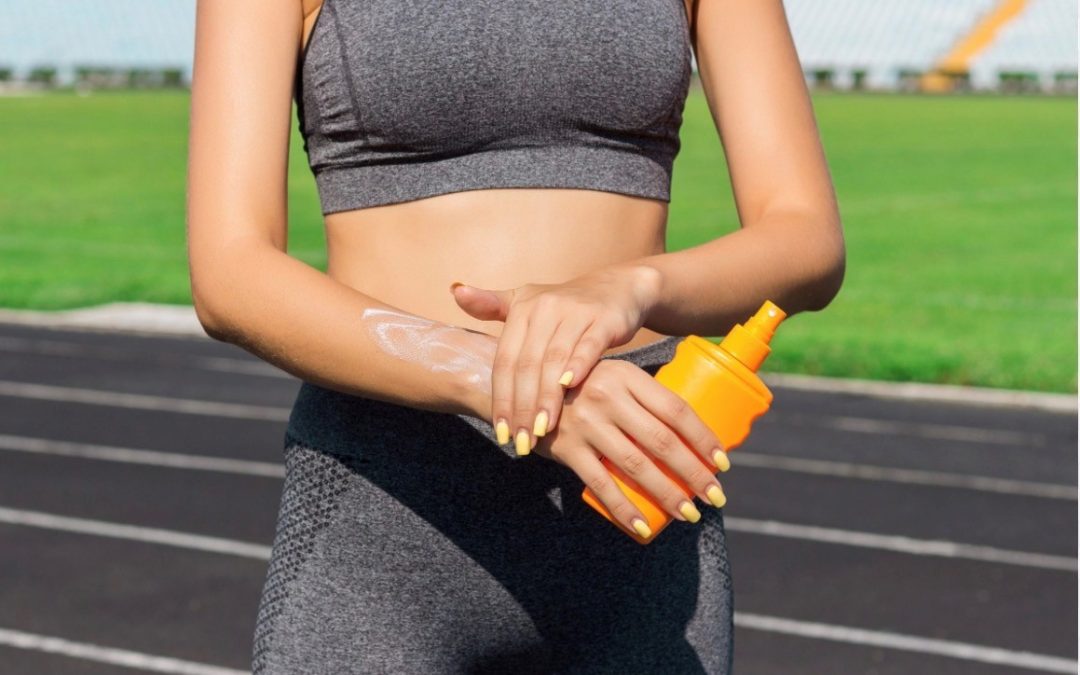
Skin Cancer in Athletes and Outdoor Workers
If you train, compete, coach, or work outside for hours at a time, UV exposure isn’t an occasional risk—it’s a repeated, cumulative load on your skin. The good news: effective prevention is worth starting at any age.
Why athletes and outdoor workers are a high-risk group
The World Health Organization recognises that outdoor workers exposed to UV radiation have an increased risk of non-melanoma (basal cell carcinoma and squamous cell carcinoma) and melanoma skin cancers. In 2023, WHO reported that occupational sun exposure contributes substantially to deaths from non-melanoma skin cancer—a reminder that chronic exposure is a serious workplace hazard, not a cosmetic issue.
Athletes face similar patterns of repeated exposure: long training sessions, competitions, and travel—often during peak UV hours and in reflective environments (water, sand, concrete or snow).
The core concept: UV damage is cumulative
UV damage accumulates silently over years. You don’t need to “burn” every single time for harm to your skin to occur. Repeated sunburns are particularly concerning: the Skin Cancer Foundation notes that repeated sunburns raise risk, and sunburn plays a clear role in melanoma development.
Why early UV exposure matters
Many long-term risk patterns begin young—school sports, lifeguarding, outdoor summer jobs, weekend games. The earlier the high-dose UV exposure starts, the more “life-time exposure” is accumulated before adulthood. Even if someone is now diligent, it still makes sense to reduce future UV load—because the cumulative total continues to rise.
Prevention strategies that work
- Sunscreen that survives sport
Choose broad-spectrum protection
Key points athletes miss:
- No sunscreen is “sweatproof” or “waterproof.” Labels may say water-resistant, and you still need to reapply after sweating or swimming.
- Reapplication isn’t optional in endurance settings—build it into breaks, halftime, or aid stations.
- Clothing is your highest-value “SPF”
For long sessions, protective clothing is very important:
- Long-sleeve training tops/leggings where feasible
- A brimmed hat or cap with a neck flap for long exposure
- Sunglasses (UV protection) to reduce eye damage risk (WHO emphasises UV-related eye harm as well)
- Schedule and shade: win without losing training quality
- Shift sessions earlier or later when possible
- Build shade into the environment: marquees at fields, shade structures at worksites
- For “can’t move it” times (midday competitions), double down on clothing + sunscreen + shade breaks
SunSmart explicitly recommends sun protection for sport and prolonged outdoor activity—particularly in the 10am–4pm window during the higher-UV season.
- Don’t forget the high-miss zones
These are the areas most commonly missed and most often exposed in sport:
- ears, back of neck, scalp part line
- nose, lips
- tops of shoulders
- backs of hands
- calves/shins (runners) and behind knees
- Team systems beat individual willpower
For clubs, schools, and outdoor workplaces:
- Make sunscreen available in shared areas
- Add a “sunscreen check” to warm-ups/toolbox talks
- Encourage hats/UPF gear as part of uniform standards
When to book a skin check
- a spot changing in size, colour, or shape
- a sore that doesn’t heal
- a new persistent lesion, especially on high-exposure sites (face, scalp, shoulders, forearms)
For high-exposure athletes/outdoor workers, routine checks are a sensible part of preventive healthcare—not vanity.
Recent Comments