
Understanding Squamous Carcinoma
What is squamous cell carcinoma?
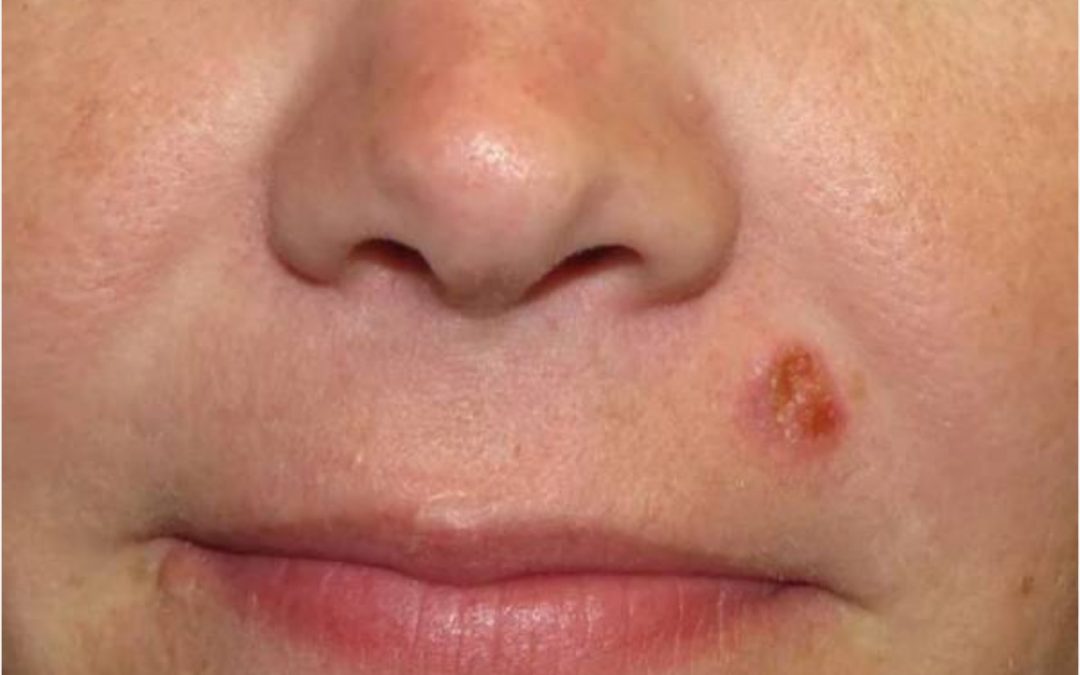
Cutaneous squamous cell carcinoma (SCC) which is often called squamous cell carcinoma (SCC) is the second most common type of non-melanoma skin cancer. It is derived from cells within the epidermis that make keratin — the horny protein that makes up skin, hair and nails. It can often appear as a firm pink lump with a rough or crusted surface.
It is more common on sun exposed areas such as the head, ears, neck and back of the hands. It can metastasize elsewhere and must be treated early
What are the risk factors for SCC?
The main risks factors for developing SCC are:
- Long term sun exposure
- Older age
- Gender-more common in male patients
- Fair skin, blue or green eyes, blond or red hair
- Previous skin cancer
- Sun damage-actinic keratosis
- Previous cutaneous injury-thermal burn, lupus, sebaceous naevus
- Immunosuppression
- Chronic inflammation
- Ionising radiation and exposure to arsenic
- Family history
Who is more likely to develop SCC?
The following groups of people are at greater risk of developing the SCC:
- Immunosuppressed patients
- People who have had significant long term and cumulative ultraviolet light exposure
- People susceptible to sunburn
- People who use sun beds regularly (need to avoid tanning beds)
- People with UV-sensitive skin conditions such as albinism and xeroderma pigmentosum
What are the clinical features of SCC?
SCC can vary in their appearance, but most usually it appears as:
- Scaly or crusty raised area of skin with a red, inflamed base
- Hard plaque or a papule
- May look like warts
- May be painful or tender
- Can bleed or may ulcerate
- Grows over weeks or months
- Vary in size from few millimetres to several centimetres in diameter
- In addition, any change in a pre-existing skin growths, such as an open sore that fails to heal, or the development of a new growth, should prompt an immediate review
Which precancerous lesions can lead to SCC?
Actinic keratosis– rough, scaly, slightly raised lesions -found on sun-exposed areas of the body, most often in older people. They can range in colour from brown to red. 2-10% of untreated AK advance to cSCC. AKs are often palpable before becoming visible-can be felt by running the fingers over sun-exposed areas. The rough texture that feels different from surrounding healthy skin can provide an early sign of their development.
Actinic cheilitis– form of actinic keratosis which occurs on the lower lip, causing it to become dry, cracked, scaly and pale or white. If not treated promptly, actinic cheilitis can lead to squamous cell carcinoma on the lip. If the lips are frequently chapped or burning, you may have actinic cheilitis.
Bowen’s disease– early, noninvasive (in situ) stage of SCC. It appears as a persistent red-brown, scaly patch that may resemble psoriasis or eczema. Associated with arsenic compound and HPV and It may occur anywhere on the mucocutaneous surface of the body.
How is SCC diagnosed?
Diagnosis of SCC is based on clinical features. To confirm the diagnosis, a small piece of the abnormal skin (a biopsy), or the whole area (an excision biopsy), is removed under a local anaesthetic and sent to a pathologist to be examined.
Patients with high-risk SCC may also undergo staging investigations to determine whether it has spread to lymph nodes or elsewhere.
How can SCC be treated?
If caught early, they are curable and cause minimal damage. However, the larger and deeper a tumor grows, the more dangerous and potentially disfiguring it may become, and the more extensive the treatment must be. The treatment used will depend on the type, depth of penetration, size and location of the skin cancer, as well as the patient’s age and general health.
Most skin cancers are treated surgically. This involves removing the SCC with a margin of normal skin around it (3-4mm), using a local anaesthetic. The skin is then closed with stitches or defect is reconstructed with a local flap or skin graft.
Sometimes other surgical methods are used such as Mohs surgery, curettage, cryotherapy, topical anti-cancer ointments, radiotherapy, combination of treatments for advanced skin cancers.
How can SCC be prevented?
Sun protection and being sun-smart reduces the risk of SCC and is especially vital for high risk patients. The following preventative measures will help to reduce the risk of SCC:
- Always wear sunscreen- at least SPF30+, should be broad spectrum (blocking both UVA and UVB radiation). Should be applied 15-30 minutes before going outside and then again immediately before going outside. Sunscreen needs to be reapplied regularly during the day (2-hourly in sunny weather, otherwise 3 to 4-hourly)
- Daily application to the face and hands regardless of your intended activities should be considered
- Avoid sun exposure-remain indoors or in shade during the middle of the day, between 11 am and 4 pm, when UV radiation levels are at their highest
- Cover up well- protect your skin with clothing, and don’t forget to wear a hat that protects the face, neck and ears, and sunglasses
- Sunbeds and sunlamps should be avoided
- Don’t get sunburn
- Keep newborns out of the sun
- Regularly checking your skin for signs of skin cancer can help lead to an early diagnosis and increase your chances of successful treatment
- It’s also important to be aware that if you’ve had a non-melanoma skin cancer, your risk of developing another one in the future is increased therefore regular skin check-ups are recommended
When to see a doctor
Make an appointment with your doctor if you notice any changes to your skin that worry you. It is important to examine your skin. Not all skin changes are caused by skin cancer. Your doctor will investigate your skin changes to determine a cause.
Recent Comments