
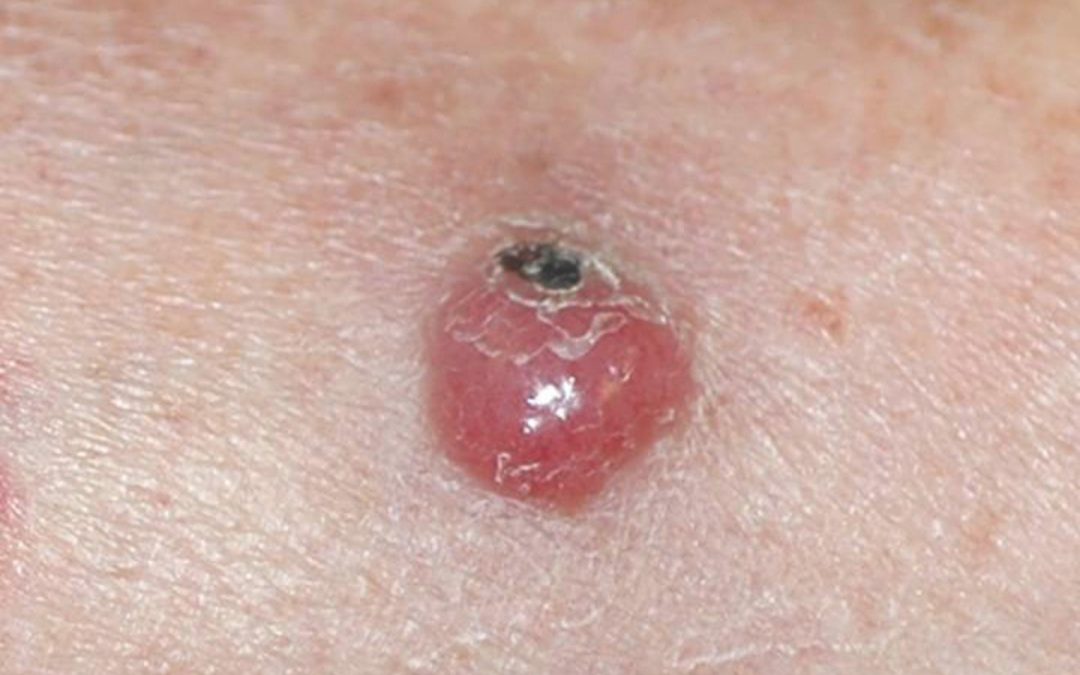
Rare Skin Cancers: Merkel Cell Carcinoma
Merkel cell carcinoma (MCC) is a rare but aggressive skin cancer. It tends to grow quickly, can spread early, and is often mistaken for a benign lump or cyst in the early stages. That combination is exactly why early detection is critical
What is Merkel cell carcinoma?
Merkel cell carcinoma is an uncommon skin cancer (also called a cutaneous neuroendocrine carcinoma) that usually appears as a single, fast-growing skin nodule. It is considered high-risk because it can metastasise relatively early.
It most often arises on sun-exposed skin such as the head/neck and limbs, although it can occur elsewhere.
Who is most at risk?
MCC is uncommon, but certain risk factors are well established:
- Older age (most cases occur in older adults)
- UV exposure (especially chronically sun-exposed skin)
- Weakened immune system (e.g., immunosuppression)
- Merkel cell polyomavirus (MCPyV/MCV), which is linked to many MCC cases
- Fair skin / male sex are also recognised risk factors in many datasets
A useful clinical memory aid is the AEIOU warning pattern associated with MCC risk and presentation:
- Asymptomatic (often not painful)
- Expanding rapidly
- Immunosuppressed
- Older than 50
- UV-exposed site on fair skin
This is not a diagnostic rule, but it is a helpful prompt to investigate suspicious lesions early.
How does Merkel cell carcinoma present?
MCC often presents in a way that looks deceptively harmless.
Common features include:
- A firm, dome-shaped or shiny bump/nodule
- Pink, red, or purple colour (sometimes skin-coloured)
- Rapid growth over weeks to months
- Often painless
- Sometimes the surface may ulcerate or bleed later
Because it is frequently painless and can resemble a cyst, inflamed follicle, or other benign lesion, people may delay seeking care—and clinicians often need a biopsy to confirm the diagnosis.
Why is early detection so important?
MCC can behave aggressively. Early diagnosis matters because:
- It can spread to lymph nodes and beyond relatively early
- Treatment is generally more effective when the tumour is detected at a smaller, localised stage
- Delays in biopsy or referral can allow progression that makes treatment more complex
In practice, the key message is simple: a new, rapidly growing, painless skin lump deserves prompt assessment—especially in an older or immunosuppressed person, or on a sun-exposed site.
Diagnosis and what happens next
MCC is diagnosed with a skin biopsy. After diagnosis, further assessment is typically done to determine whether it has spread (staging).
When to seek urgent skin review
Patients should seek prompt medical review for:
- A new lump that is growing quickly
- A lesion that is shiny, firm, red/purple, and persistent
- Any rapidly changing spot on the head, neck, or other sun-exposed area
- A suspicious lesion in someone who is immunosuppressed or older than 50
Key takeaway
Merkel cell carcinoma is rare, but it is not “minor.” It is an aggressive skin cancer that can look deceptively simple at first. The most important step is recognition and early biopsy of any suspicious, rapidly enlarging skin nodule
Recent Comments