
C-section scar revision
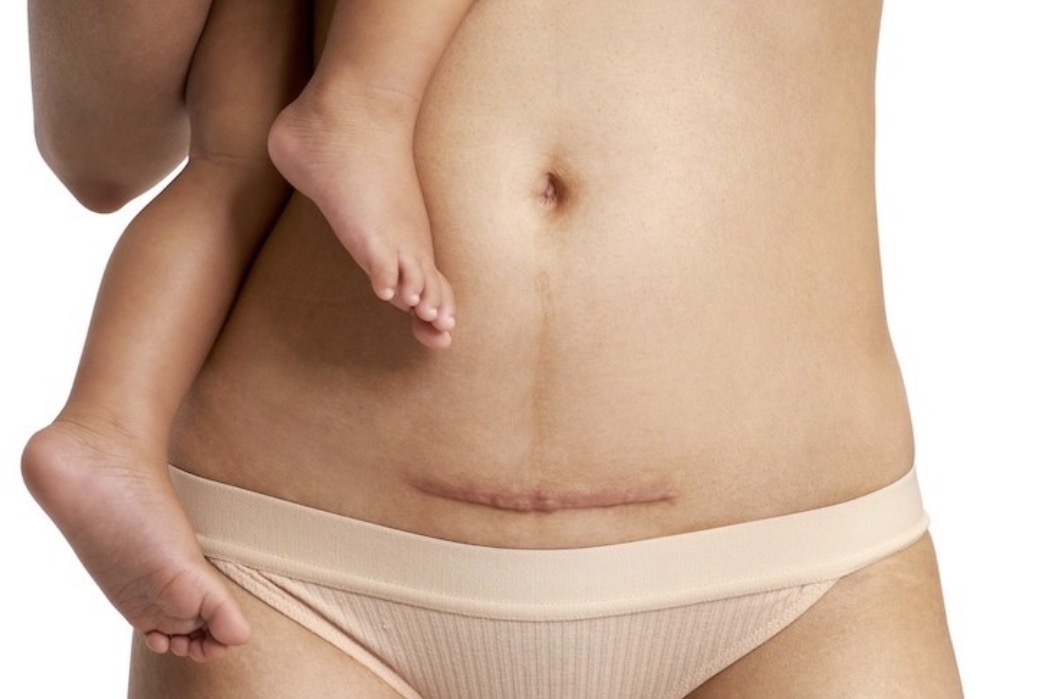
Childbirth by caesarean section leaves a scar across the lower abdomen. In most cases these scars heal well and are hidden below the underwear line. Sometimes, however, the healing process is unpredictable, and the scar can become thickened, discoloured, or widened.
In some patients, there may be an overhang or loose skin associated with a poor, tethered C-section scar. The swelling above the scar can bulge through tight clothing. The cause is tethering of the healing scar to deeper structures as it heals. These changes can affect your confidence and make
some clothing difficult to wear. Genetics, skin type, infection and how the wound was closed all influence the final appearance of a C‑section scar.
If you are unhappy with the look or feel of your scar, that can be surgically revised by excision of the old C-section scar and the bulge under general anaesthesia as a day case (approach similar to mini-tummy tuck). The goal is not to remove the scar entirely – this is not possible – but to make it less
obvious, smoother and more comfortable. Revision can improve the texture of the scar and, when there is tethering or an overhang, release the scar from the underlying tissues so the abdomen looks flatter.
The C-section scar revision which is symptomatic and causes pain, dermatitis and effects daily activities is often covered by private medical insurance.
Many women choose to combine scar revision with a tummy‑tuck or “mummy makeover” to address excess skin or muscle separation at the same time.
C-SECTION SCAR REVISION – FACTS
| Length of surgery | 1-2 hours. The procedure involves excising the |
| Anaesthesia | General anaesthetic |
| Hospital stay | Day case |
| Risks/complications of surgery | Frequent: Bruising, swelling, temporary numbness |
| Recovery | 5-7 days until socialising with close friends and family |
| Driving | 1-2 weeks once you can comfortably wear a seatbelt and perform an emergency stop |
| Sleeping position | Sleep on your back |
| Follow up | 1 week, 6 weeks, 3 months, 6 months, 12 months |
| Duration of results |
Long-lasting unless pregnancy and weight gain/loss |
DOWNLOAD FURTHER INFORMATION
C-Section Scar Revision
Any plastic surgery procedure is a very personal choice and understandably there are a few questions that arise. This information sheet is a general guide for patients considering lower body lift under the care of Dr Mackenzie. It should provide the answers to some questions that you may have. There are many factors that can affect your individual operation, your recovery, and the long-term result. Some of these factors include your overall health, previous surgery, any bleeding tendencies that you have and your healing capabilities, some of which will be affected by smoking, alcohol, and various medications. Such issues that are specific to you need to be discussed with Dr Mackenzie and are not covered here. Please feel free to ask her any further questions before you sign the consent form.
What is a C-section scar?
A C‑section scar is the scar left on the abdomen after a Cesarean section, a surgical procedure used to deliver a baby through an incision in the abdominal wall and uterus. The standard incision is a horizontal line low on the abdomen, but occasionally a vertical incision is required, especially in emergency situations. While many women develop a flat, pale line that blends with the surrounding skin, some scars become hypertrophic (thickened and raised), keloid (extending beyond the original incision) or depressed so that the surrounding skin overhangs. Redness, itching or discomfort can also persist.
What is a C-section scar revision?
Scar revision is a surgical procedure performed by a plastic surgeon to improve the appearance or contour of a previous C-section scar. It is done when the original scar has healed in a way that causes issues such as indentation, tightness, or an uneven contour of the lower abdomen.
For C‑section scars, the surgeon removes the old scar and any excess or tethered tissue and re‑closes the incision with meticulous technique. In some cases, the surrounding fatty tissue may be contoured with liposuction, and if the abdominal muscles have separated or there is significant skin excess, a tummy tuck may be recommended. The aim is to produce a smoother, less noticeable scar that sits flush with the surrounding skin.
A scar will never disappear completely, but treatment can often make it flatter, softer, and less noticeable.
Why might someone seek C-section scar revision?
Many women consider scar revision if their scar is:
1. Depressed or tethered, causing a noticeable step or skin fold over the scar
2. Raised, red or painful, such as hypertrophic or keloid scars that remain itchy or uncomfortable
3. Asymmetrical or wide
4. Discoloured or widened so that the scar shows through clothing or swimwear
5. Associated with other abdominal concerns, such as muscle separation or loose skin, making a combined procedure desirable
What are the treatment options?
Treatment for a C-section scar depends on how the scar healed and what symptoms it causes. Not all C‑section scars need surgery. Non‑surgical treatments, similar to those used for other scars, may improve redness or thickening. Options include silicone gel or sheets, scar massage, sun protection, steroid injections and laser therapy, which can flatten and lighten the scar. Surgical revision is considered when these measures are inadequate or when the scar causes tethering or contour deformities. This procedure:
Removed old scar
Releases deeper tethering
Improves contour of the lower abdomen
What are the complications of C-section scar revision?
In general, C-section scar revision surgery is safe. Nevertheless, no surgery is without risk.
All general anaesthetics carry risks such as deep vein thrombosis and chest infection but with modern anaesthetic techniques, these are minimised.
Some of the complications that can happen include slow healing, infection, bleeding, swelling, bruising, poor scarring, asymmetry, pain, numbness or sensitivity in the skin, contour irregularities, seroma.
Your plastic surgeon will discuss these risks and advise you on scar care to minimise them. It is important to remember that no scar can be removed completely, but revision can significantly improve its appearance.
Next steps
C‑section scar revision is a personal choice. Consultation with a qualified specialist plastic surgeon is essential to assess the scar, discuss your goals and determine whether surgery, non‑surgical options or a combination is most appropriate. Dr Katarzyna Mackenzie will provide an honest appraisal and
explain what can realistically be achieved. If you decide to proceed, you will be given detailed instructions on how to prepare for surgery and care for the scar afterward.
To learn more about C‑section scar revision and whether it is right for you, please contact Dr Mackenzie for a personalised consultation.